

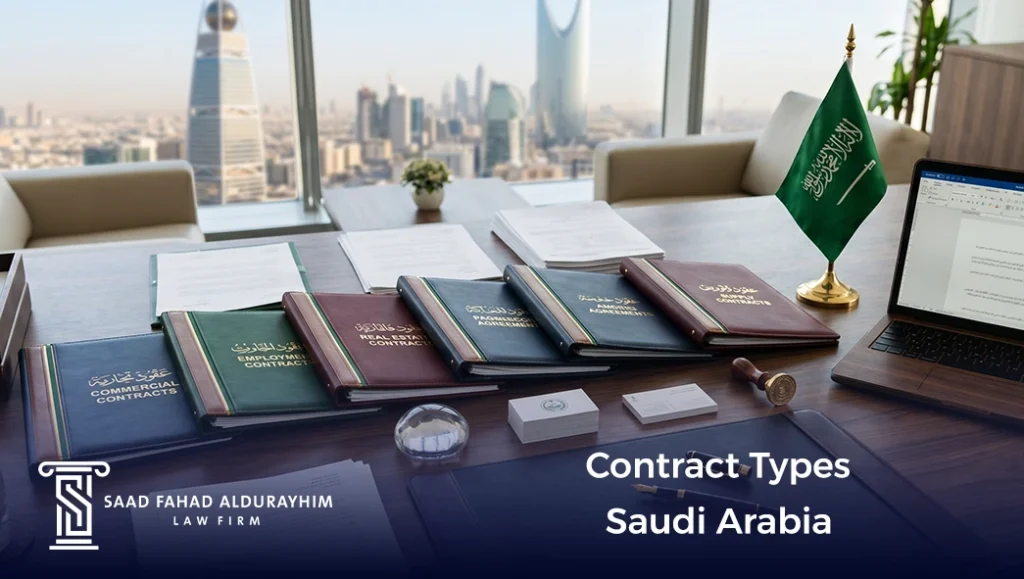
Many commercial and financial disputes do not begin because of bad intentions between the parties, but rather because of an unclear contract or the use of a contract type that does not fit the nature of their legal and contractual relationship. Two partners may enter into a successful business venture without regulating management powers or defining an exit mechanism from the partnership, or a company may rely on a generic commercial agreement that fails to address delays and breaches of obligations. As a result, disputes arise later that could have been avoided from the beginning through precise legal drafting.
In this article, we will explore the main types of contracts in Saudi Arabia, the differences between commercial, civil, employment, and partnership agreements, as well as the most important clauses to review before signing any contract and the common mistakes that may lead to future legal disputes.
What Is a Contract Under Saudi Law?
A contract is a legal agreement concluded between two or more parties for the purpose of creating binding obligations and rights in accordance with mutually agreed terms and conditions. Contracts are considered one of the most important legal tools regulating commercial, civil, employment, and investment transactions in the Kingdom of Saudi Arabia.
The importance of contracts goes beyond merely documenting an agreement, as they also help in:
- Defining responsibilities and obligations.
- Organizing financial rights.
- Reducing the likelihood of disputes.
- Clarifying the process for terminating the contractual relationship.
- Determining compensation and dispute resolution mechanisms.
In many legal disputes, the true strength of a contract only becomes evident once a disagreement arises between the parties, as the contract becomes the primary reference relied upon by courts in determining rights and obligations. For this reason, relying on generic templates or using broad agreements without proper legal review may create legal issues that become difficult to resolve later.
What Are the Main Types of Contracts in Saudi Arabia?
Saudi Arabia recognizes various types of contracts used to regulate commercial, civil, and employment relationships between individuals and businesses. Each type differs depending on the nature of the activity and the legal obligations associated with it.
The most commonly used contracts include:
- Commercial contracts.
- Civil contracts.
- Employment contracts.
- Partnership agreements.
- Franchise agreements.
- Supply contracts.
- Service agreements.
- Sale and lease contracts.
Contracts may also be categorized based on their legal nature into:
- Bilateral binding contracts.
- Consensual contracts concluded through mutual agreement.
- Instant-performance contracts.
- Continuous contracts whose effects extend over time.
Choosing the appropriate contract type carries important legal consequences related to enforcement, judicial jurisdiction, and the rights of the parties in the event of breach or termination.
Commercial Contracts and Their Main Uses
Commercial contracts are used to regulate relationships connected to business activities and profit-oriented transactions. They are among the most frequently used agreements between companies, institutions, and merchants in Saudi Arabia.
Common examples of commercial contracts include:
- Supply agreements.
- Distribution agreements.
- Franchise contracts.
- Commercial agency agreements.
- Service contracts.
- Commercial sales agreements.
These contracts involve financial and operational obligations and therefore require precise legal drafting covering matters such as delivery procedures, implementation timelines, payment schedules, compensation mechanisms, and termination conditions.
Among the most common commercial disputes are:
- Delays in supply or service delivery.
- Failure to meet quality specifications.
- Non-payment or delayed payments.
- Violation of exclusivity or confidentiality obligations.
- Sudden termination of the commercial relationship.
For this reason, commercial contracts should contain clear clauses regulating such situations and defining the responsibility of each party in the event of breach.
Important clauses in commercial contracts include:
- Liquidated damages clauses.
- Force majeure provisions.
- Jurisdiction clauses.
- Dispute resolution mechanisms.
- Confidentiality protection.
- Termination and compensation provisions.
In long-term agreements particularly, the absence of these clauses may result in financial and operational disputes that directly affect business stability.
Civil Contracts and When They Are Used
Civil contracts regulate non-commercial relationships and transactions between individuals. They are commonly used in everyday agreements unrelated to organized commercial or profit-making activities.
Examples of civil contracts include:
- Sale and lease agreements between individuals.
- Loan agreements.
- Gift agreements.
- Simple service contracts.
Although civil contracts may appear less complex than commercial agreements, many legal disputes arise because of poor documentation or the use of vague language that fails to clearly define obligations and rights.
For example, failing to specify maintenance responsibilities in a lease agreement or omitting a clear description of financial obligations in a sales contract may lead to disputes that become difficult to prove later.
Key points to consider in civil contracts include:
- Clearly identifying the subject matter of the contract.
- Specifying financial consideration.
- Determining the duration of obligations.
- Regulating termination or cancellation cases.
- Properly documenting the agreement.
Some individuals also rely on verbal agreements in civil transactions, which may create serious difficulties when attempting to prove rights before a competent court, especially in the absence of supporting documents or evidence.
Employment Contracts and the Rights of Both Parties
Employment contracts regulate the relationship between employees and employers under Saudi Labor Law. They define the essential rights and obligations of both parties, including job duties, salary, contract duration, working hours, and termination procedures.
Employment contracts vary depending on the nature of the position and may include:
- Fixed-term contracts.
- Unlimited-term contracts.
- Full-time contracts.
- Part-time or temporary contracts.
Important clauses to review before signing an employment contract include:
- Salary and financial benefits.
- Contract duration.
- Probation period.
- Leave entitlements.
- Termination conditions.
- Notice periods.
- Professional obligations.
Many labor disputes arise because of unclear clauses or the use of contractual terms inconsistent with the nature of the job or Saudi labor regulations, particularly regarding financial entitlements or termination procedures.
In some situations, employees or employers sign contracts without reviewing compensation terms, working hours, or non-compete clauses, only for disputes to emerge later and negatively affect workplace stability.
Partnership Agreements and Protection of Partners’ Rights
Partnership agreements are among the most important commercial and investment contracts because they regulate the relationship between partners and define the management structure, distribution of profits and losses, and financial and administrative powers.
A partnership agreement generally includes:
- Ownership percentages of partners.
- Profit and loss distribution mechanisms.
- Management authority.
- Decision-making procedures.
- Obligations of each partner.
- Exit or share transfer mechanisms.
- Dispute resolution methods.
Some commercially successful partnerships eventually end in severe legal disputes solely because the agreement failed to regulate partner withdrawal or financial decision-making processes.
Other issues may arise when the agreement does not contain clear mechanisms for dealing with:
- Business failure.
- Breach of obligations.
- Death of a partner.
- Entry of a new investor.
- Business liquidation.
Relying solely on personal trust without a detailed partnership agreement is considered one of the most common legal mistakes in startup and family businesses.
A clear partnership agreement also protects the business itself, not just the partners’ rights, by establishing a legal framework that minimizes disruptions when future disagreements occur.
Why Do You Need a Lawyer When Drafting Contracts?
Hiring a lawyer specialized in drafting or reviewing contracts helps identify legal loopholes before they develop into actual disputes, especially in commercial agreements, partnerships, or long-term contracts.
A lawyer can assist with:
- Choosing the appropriate contract type.
- Drafting clauses clearly and accurately.
- Organizing rights and obligations.
- Reducing legal risks.
- Reviewing compensation and penalty clauses.
- Protecting commercial and financial interests.
Many legal issues do not appear at the signing stage but arise later during implementation or termination of contractual obligations. Therefore, prior legal review can save parties from significant disputes and future losses.
Frequently Asked Questions
Are Verbal Contracts Recognized?
Verbal agreements may be recognized in very limited situations, but proving them is significantly more difficult than proving written contracts. Therefore, important agreements should always be documented in writing.
What Is the Difference Between Fixed-Term and Unlimited-Term Contracts?
A fixed-term contract ends upon expiration of the agreed period, while an unlimited-term contract continues until one of the parties decides to terminate it in accordance with applicable legal procedures.
Can a Contract Be Amended After Signing?
Yes, contracts may be amended by mutual agreement through an addendum or supplementary agreement outlining the new modifications.
When Is a Contract Considered Void?
A contract may be deemed void if it violates laws or regulations, involves an unlawful subject matter, or lacks one of its essential legal elements.
Must All Contracts Be Officially Notarized?
Not all contracts require formal notarization, but certain agreements must be registered or documented depending on their nature and the laws governing them.
Why Is a Penalty Clause Important in Contracts?
A penalty clause helps determine compensation in the event of breach and reduces disputes related to assessing damages.
Conclusion
If you wish to draft a legally sound contract or review an existing agreement to ensure compliance with Saudi laws and better protect your interests, obtaining specialized legal advice can help you avoid many legal loopholes and future disputes.
Contact Saad Fahad Al-Duraihim Law Firm today for professional legal support in drafting, reviewing, and structuring contracts and agreements in accordance with the nature of your business and the laws and regulations applicable in the Kingdom of Saudi Arabia.